
Energy Management
Carlsberg Malaysia Group’s approach in managing energy management:
Own Operations: Adopts a structured and forward-looking approach to Energy Management under IFRS S1, recognising that reliable and efficient energy supply is essential to our operational continuity and long-term resilience. At the operational level, we closely monitor our energy sources
— particularly natural gas — to mitigate risks arising from supply interruptions, as evidenced by past gas disruptions that highlighted our exposure to energy security risks.
Value Chain: We work collaboratively with suppliers, energy partners and service providers to strengthen energy reliability and efficiency, including assessing the carbon and operational implications of major energy-related investments, such as biomass boilers and renewable energy procurement. This includes due diligence on upstream fuel sources and logistics to avoid unintended supply chain risks or overestimated decarbonisation benefits.
8.1 GOVERNANCE
We actively implement measures to enhance energy efficiency, reduce carbon emissions and manage waste across our operations, guided by the Carlsberg Group’s Environmental Policy and Guidelines. Our approach enables systematic 3R (Reduce, Reuse and Recycle) programmes to achieve our zero waste to landfill target, alongside initiatives to lower greenhouse gas (GHG) emissions, particularly methane (CH4) and carbon dioxide (CO2). Furthermore, to ensure our commitment translates into measurable progress, we have set clear targets and action plans, regularly benchmarking our performance against the Carlsberg Group and regional breweries in energy consumption, emissions management and sustainable waste practices.
8.2 STRATEGY
We note that this section is distinct from IFRS S2 sections on energy efficiency as this section is referring to our energy sustainability, focusing on stable energy supply chains. Our non-renewable energy comprises natural gas, used for our brewery’s boiler, and purchased electricity from the national grid for our offices in Malaysia and Singapore.
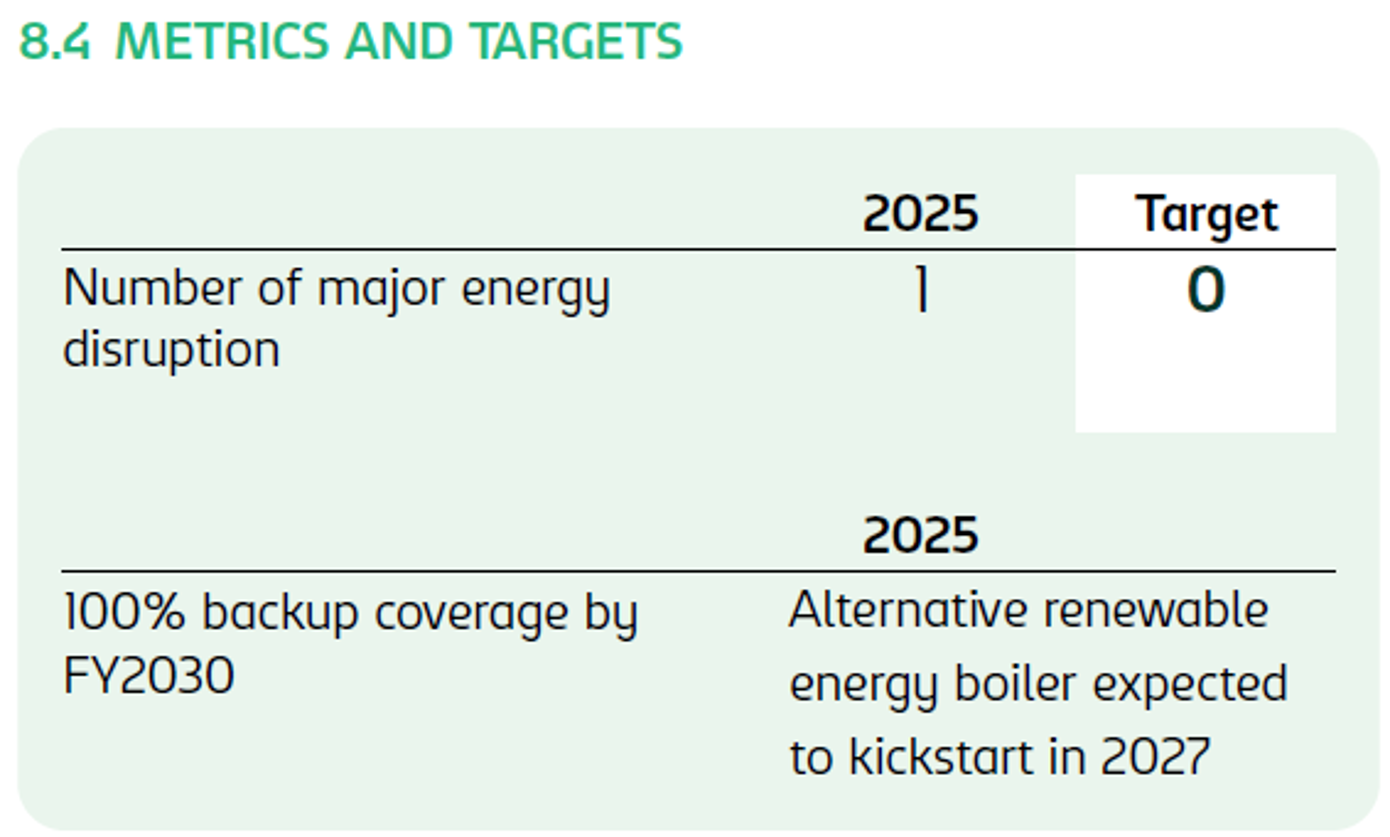
For our natural gas consumption, a key risk consideration that has been added is the Shah Alam district-wide gas supply disruption due to a gas pipeline explosion in Putra Heights in April 2025. This affected our production, resulting in actual additional direct costs of RM0.52 million for alternative gas supplies and modifications to existing assets to prevent an extended operational halt.
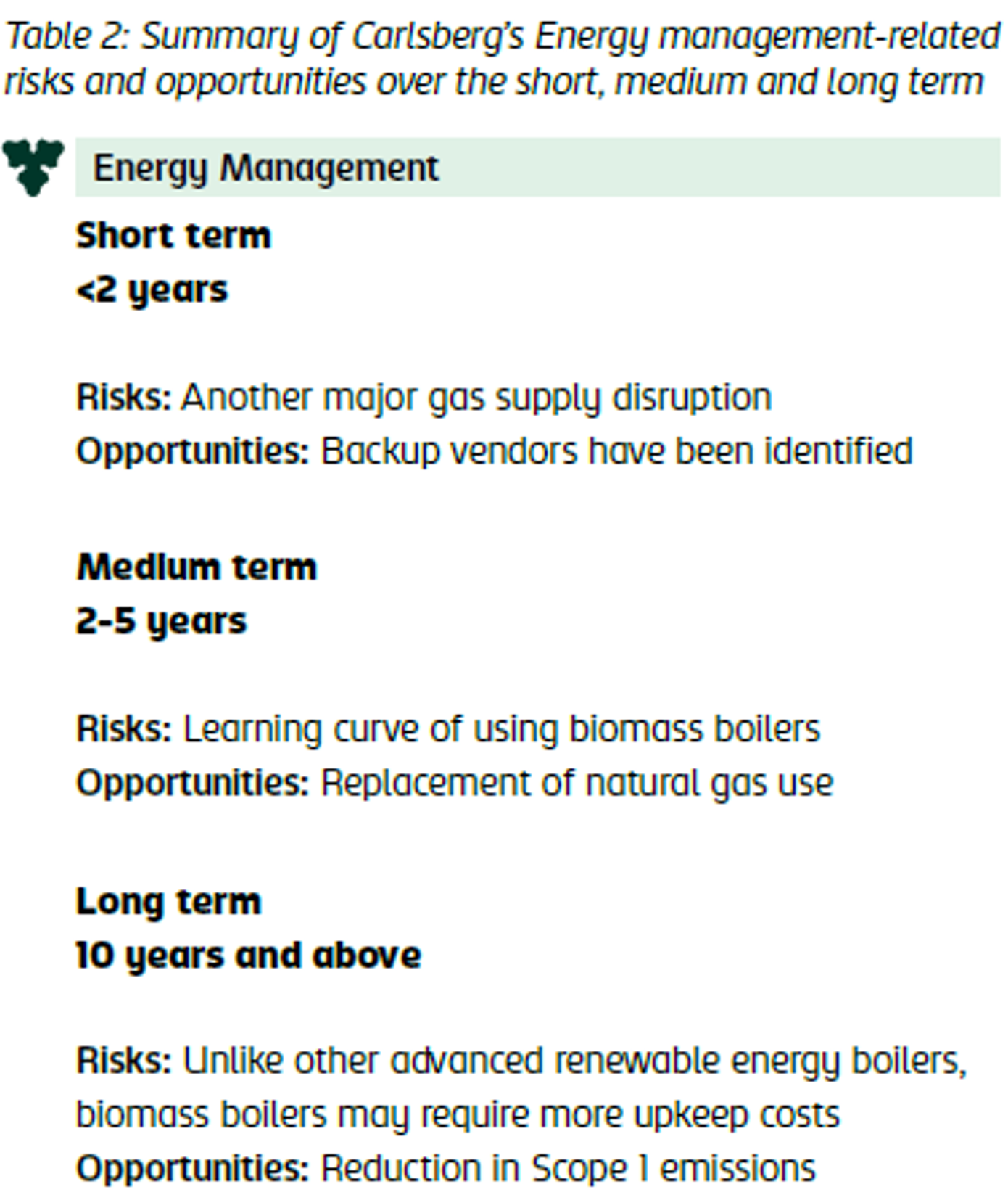
As part of the response to this, comprehensive short- mediumand long-term plans were implemented to address these energy supply concerns. For example, in the short term, RM0.09 million was spent to upgrade the current boiler system to also be able to use alternative fuel in case of emergency and gas supplies are limited. In the medium term, there are plans to enable the boilers to utilise biomass (dried oil palm organic waste) as fuel.
In the case of our electricity usage, this will be addressed under climate resilience of this statement.
For natural gas:
- The risk of gas disruption continues to pose a challenge to our operations, as Malaysia relies on a single gas provider. To address this risk, we have put in place the following mitigation measures:
- Short term: An alternative vendor has been identified, and national efforts are underway to upgrade gaspipelines to prevent future incidents. The current boiler has also been modified to utilise alternative fuel in the event of another disruption.
- Medium term: We have initiated our biomass project under the EaAS model. The estimated additional cost of running our operations on biomass in comparison to normal boiler is expected to be between 15% and 20% more.
8.3 RISK MANAGEMENT
Based on the identified risks and opportunities over the short, medium and long term as identified in the previous section, we have put together the following risk management recommendations. For the alternative vendors for natural gas supplies, we have established a formal process for maintaining a panel of pre-qualified alternative fuel vendors. Triennial dry-run exercises simulating a supply disruption to test our brewery’s infrastructure, vendor response times and internal coordination will be conducted to develop the onsite experience and know-how to smoothly transition to the backup natural gas supply.
As for the boiler upgrade to enable diesel fuel usage, a periodic testing schedule has been established to utilise the backup fuel system to ensure it remains operational and staff are trained on its use, given that the requirements for natural gas flow and diesel pumping are significantly different and require a different set of safety measures and safe operating procedures.

Central & Eastern Europe and India
-
Azerbaijan
-
Belarus
-
Bulgaria
-
Canada
-
Croatia
-
Estonia
-
Greece
-
Hungary
-
India
-
Italy
-
Kazakhstan
-
Latvia
-
Lithuania
-
Serbia
-
Ukraine